
amazing
(174 days ago)The original source image was an image that was on photoshoptalent, so I posted the source image in my album. You can find it HERE.
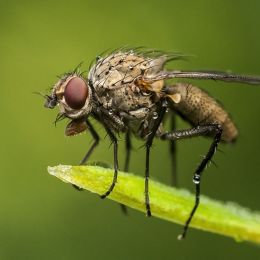
When I made this originally, someone suggested to give the spider a reflection. That's what we will be doing in the last 2 steps of the tutorial.
I made this tutorial in a way that when you have completed it you can go back at any stage and add your own style or effect.

Step 1
Ok, let’s start!
First of all lets download the microscope:
http://www.pxleyes.com/picture/9123/4ab400c621436.html

Step 2
Now, with your pen tool you need to cut the following 6 sections of this image:
1. The eye piece
2. The shoulder
3. The lens
4. The adjuster
5. The light
6. The sticker

Step 3
Once you have cut out these sections, using your select tool (pen tool) , create a new layer and place each on their own layer, so they look like what you see in this image:
(If you are quite new to pen tool, have a look at this tutorial to find everything you need to know about using it: http://www.pxleyes.com/ext-tutorial/photoshop/4381/Pen-Tool--The-Comprehensive-Guide.html)

Step 4
Now, create a new document that is 3000x3000 pixels, using a white background and 300dpi.
This will be referred to as the " Spider " Document

Step 5
Create a new layer on the Spider document. Double click the foreground colour and you will be presented with a dialog box; set the RGB to the same as in this tutorial, which is:
R- 70, G- 191, B- 171

Step 6
Double click the background colour and you will be presented with a dialog box; set the RGB to the same as in this tutorial, which is:
R- 80, G- 100, B- 224

Step 7
Now select your gradient tool you should see a gradient bar in your tool bar in the top left hand corner of your work space, then double click on (A) you will then be given a dialog box.
(If you are unable to find the gradient tool, you may see a paint bucket in your menu, if you click and hold the paint bucket you will then be able to see your gradient tool.)

Step 8
This is the gradient tool dialog box make sure that the setting is set to (A) by clicking on it once ( foreground to background ) as in the image.

Step 9
With the gradient tool selected, drag from the top left of the layer to the bottom right. Once you have done that, click on the ‘ eye ’ icon on the display to the right of your image in the layer palette, this will hide that layer until you are ready to use it again.

Step 10
Create another empty layer .
With your gradient tool still selected, double click on the foreground colour again like you did for step 5 but this time, use RGB setting: R- 88, G- 255, B- 48

Step 11
Double click on the background colour again like in step 6, using RGB setting: R- 39. G- 255, B- 133

Step 12
With the gradient tool selected, drag from top left of the layer to bottom right. Once you have done that, click on the layer blending mode which is located in the layer panel (at the right of your image) and set to ‘ Pin light ’. Again, click on the eye icon for this layer to hide it until you’re ready to use it again.

Step 13
Now, go to your microscope document and find the layer with section 5 on it ( the light ).
Now drag this layer to your ( Spider ) document,drag this layer down onto the ( New layer )’ icon (located to the left of the trash can in the layer palette); this will make a duplicate of that layer.
Then click the ‘eye’ icon of the original layer to hide it!
Now, click on the new duplicate layer that you made and press ( Ctrl+t ).
You will then be given a white box around that object on the layer; right click within that white box and you will get a menu, select ( WARP ) and use the handles which are the white squares and grey circles around the box, and manipulate the object until it looks like image B.

Step 14
Repeat step 13 until you end up with another 2 segments so that it looks like the image below.
If you are struggling to line them up, use the ‘free transform’ tool ( Ctrl+t ); this will enable you to move and rotate them.
(Hold your cursor on the corners of the white box an arrow that points left and right will appear this will allow to rotate).
Make sure you place each segment on its own layer, then select all 3 layers and drag them to the ‘ Group ’ icon in the layer palette.

Step 15
Name this group ‘ Leg 1 ’ by double clicking on the Group in the layer palette, then add a mask to each layer within the group by clicking on each layer and then the mask icon at the bottom of the layer palette.

Step 16
Select your paint brushes (make sure it’s set to a solid brush). To do this, make sure you are on the mask of one of the layers, and then right click on the image itself.
You will be given the brush dialog box; select 19 (round solid). Now, clean off the edges of the segments (B) and paint in the holes on the segments (A) do this on all 3 layers.

Step 17
Now you have done that, drag the group that contains the segments ( Leg 1 ) to the ‘new layer’ icon until you have 4 groups in total (take the time to name these groups in sequence).
You will need to make adjustments to all the groups to make sure they look like what you see in the image, by using the free transform tool ( Ctrl+t ).
Once you have done this, drag all the groups and place them in 1 group, then click on the ‘ eye ’ icon to hide this group for the moment.

Step 18
Go to your microscope image and drag the layer that contains object 4 on to this Spider document. Like you did in step 13, make a copy of the layer, then hide the original layer as before.
Use your transform tool ( Ctrl+t ), to manipulate the duplicate layer until it looks like figure 2.

Step 19
You will need to use the ‘free transform’ tool until you get the desired shape, then create another 3 layers of the same object until you have this! Then drag all 4 layers into a group, and name this group ‘ Body ’.
Then hide the group by clicking on the ‘ eye ’ icon.

Step 20
Go to your microscope image and drag the layer that contains object 3 on to the Spider document. Like in step 13 and 18, make a copy of the layer, then hide the original layer as before.
Use your transform tool ( Ctrl+t ), to manipulate the duplicate layer until it looks like figure B.

Step 21
Now create 3 additional copies of this layer. Now in your layer palette find the group named ‘ Leg 1 ’ and click on the eye icon next to it so you can see it.
You should be able to see the legs plus object 3 (which we will call the Knuckle ).
Now go to each of the layers with a knuckle and use the move tool to line them up with each of the legs; until it looks like the image below:

Step 22
Now in your layer palette, find the group named ‘ Body ’. Click on the ‘ eye ’ icon next to it so you can see it. Use the ‘move’ tool to line the body up with the knuckles and legs, as pictured below, then drag all groups into 1 Group and hide it.

Step 23
Go to your microscope image and drag the layer that contains object 1 on to the Spider document. Like in step 13, make 4 copies of the layer and use the ‘free transform’ tool until it looks like the image below.
Use your ‘move’ tool so they are stacked like in the image below, and then hide it.

Step 24
Go to your microscope image and drag the layer that contains object 2 on to the Spider document.
Like in step 13 and 18, make a copy of the layer, then hide the original layer as before. Use your ‘transform’ tool ( ctrl+t ), to manipulate the duplicate layer until it looks like the image below.
You may also wish to use the ‘ eraser tool ’ to remove any sharp edges.(This is located in the tool bar on the left hand side of your work space)

Step 25
Go to your microscope image and drag the layer that contains object 6 on to the Spider document.
Like in step 13 and 18, make a copy of the layer, then hide the original layer as before. Use your ‘transform’ tool ( Ctrl+t ) to rotate the sticker, and then position it as shown in the image below.
Drag the layers into a new group rename it ‘ backend ’.

Step 26
Go to your microscope image and again, drag the layer that contains object 1 on to the Spider document. Like in step 13 and 18, make a copy of the layer, then hide the original layer as before.
Use the ‘transform’ tool ( ctrl+t ) to warp it to the desired shape like in the image below:

Step 27
Ok, now we can have a look at our hard work! Make all groups visible that belong to the Spider , but not the background.
Use the ‘move’ tool so that they are all aligned. Once you have done this, make sure that all the layers for the Spider are highlighted, and then drag them to the ‘new layer’ icon at the bottom of the layer palette.
Once you have done this, you will still have layers highlighted; right click and ‘ merge layers ’.

Step 28
Now you have half the spider! Drag the merged layer to the ‘new layer’ icon to copy the layer.
Select the ‘free transform’ tool ( ctrl+t ) and then right-click to flip vertically , and then use your mouse to line it up.
You may wish to use the arrow keys for smaller and more precise movements.

Step 29
Drag the two half of the spider to the ‘create a new layer’ icon. Hide the two halves and merge the copies.
Select the layer with the completed spider, and then press Ctrl+click to select area. Select a ‘new layer’, and then press Alt+Delete to fill the new layer with a silhouette of the spider.
Then press Ctrl+d to deselect the highlighted area of the completed spider; make a copy, and then hide both the original spider plus one of the silhouettes.

Step 30
I apologise for my next diagram, but I need to show how I give the sense of depth.
The height of the body and the backend, and also the closer the legs are to the ground, the darker the shadow will be.
P.s You can laugh now :D

Step 31
In the ‘layer palette’ drag the current image below the layer containing the completed spider.
Press ctrl+t to free-transform, and right click in the box select warp; use the handles to move the silhouette (shadow) to the required place.
I haven’t shown the image of the full Spider on this image below so you can see what i have done to the shadow layer.

Step 32
Reduce the opacity of the shadow layer to 50%

Step 33
Apply a mask to the layer and use a very soft brush to hide the backend.

Step 34
Then apply the following blur filter:
Filter>Blur>Gaussian Blur 100%

Step 35
Make the hidden layer of the spider silhouette (shadow) visible and apply a mask to it.
With a soft paint brush selected paint out the mask like in the image below.

Step 36
Make the coloured spider visible. Make sure the two silhouette (shadow) layers are below, so it should look like this image below:

Step 37
Now go to the first to layers you made, with the green and the blue gradients, and make them visible.
Look you have completed 3d spider.

Step 38
• When I first made this tutorial, someone asked me if I could put a reflection under the spider. So here is my attempt...
Make sure the layer with the coloured spider is on; copy it and hide one of the layers that are visible. Press ctrl+t and right click to warp it so that it matches the shadows under the spider.

Step 39
Now drag the warped layer so it’s above the shadows, but below the spider layer and set the layer blend mode, to Pin Light ’.

28 Comments:
Nice
(173 days ago)this is good........
(173 days ago)Man of 22nd century!
(173 days ago)nice one
(173 days ago)this is fantastic!...u r good bro!
(172 days ago)its amaizing.you are toooooooooooooooo good.
thanks for lovely tutorial.
u have excellent thought and very very nice tutorial
keep it up
Cool
(171 days ago)this is awesome!!!!!!
i've seen better
i was fun playing with your microscope ain't it?????????????????????
(165 days ago)süper olmuş muhteşem
Very creative.
(162 days ago)not bad
(161 days ago)This is an amazing tool of Photoshop and you have used it very well.
(160 days ago)wonderful...
(157 days ago)awesome i like
but i am beginner i can make from this ?
Nice One .. Thanks For Sharin....
(146 days ago)should'nt there be a step between 24 and 25?
(126 days ago)прикольняй поучёк!!! распект фотошоперам!
(124 days ago)How did you work out how to make a spider out of a microscope !!!!!!!!!!
Great tutorial and easily followed. Top marks for inventiveness.
Thanks for posting.
that was nice but i wonder what else you could use to make one
this just proves that you can use any object :d
(117 days ago)Молодец
(101 days ago)salut j'ai adorée votre tutoriel
(72 days ago)so scary !!!!


that was amazing !!!
(175 days ago)